
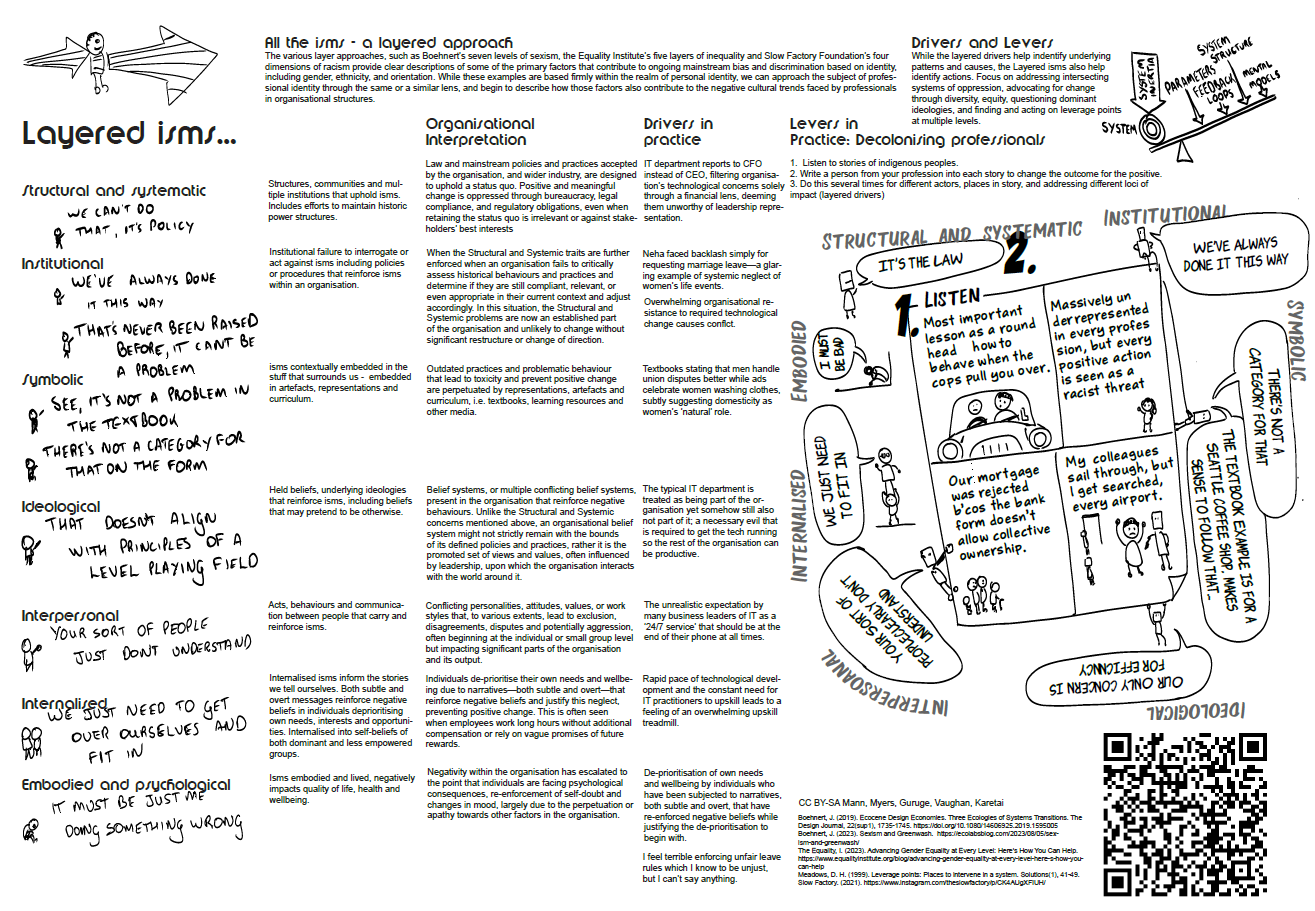
A year ago, we introduced the Layered Drivers “isms” framework building on Boehnert’s levels of sexism as a structured way to identify and act upon the complex, multi-level drivers of systemic oppression in professional settings. Since then, we’ve been busy not just talking about it, but testing and expanding it, in the messiness of real practice.
At this year’s Work-Integrated Learning International Conference (WIL25), our expanded team: Ruth Myers, Mawera Karetai, Rex Alexander, Lucky Hawkins, Kylie Wright, Jon Lasenby, Tim Lynch, and myself presented an evolution of that work. What we shared was a much more lived-in version of the model: one stretched, stressed, and animated through story.
This time around, we didn’t just describe the framework – we performed it. Each member of the team brought a professional story drawn from their real experience. These stories spanned diverse contexts: veteran advocacy, climate leadership, decolonised education design, mental health in the workplace, and more. And then, critically, we re-told those stories through the layered lens: ideological, symbolic, institutional, interpersonal, internalised, and embodied.

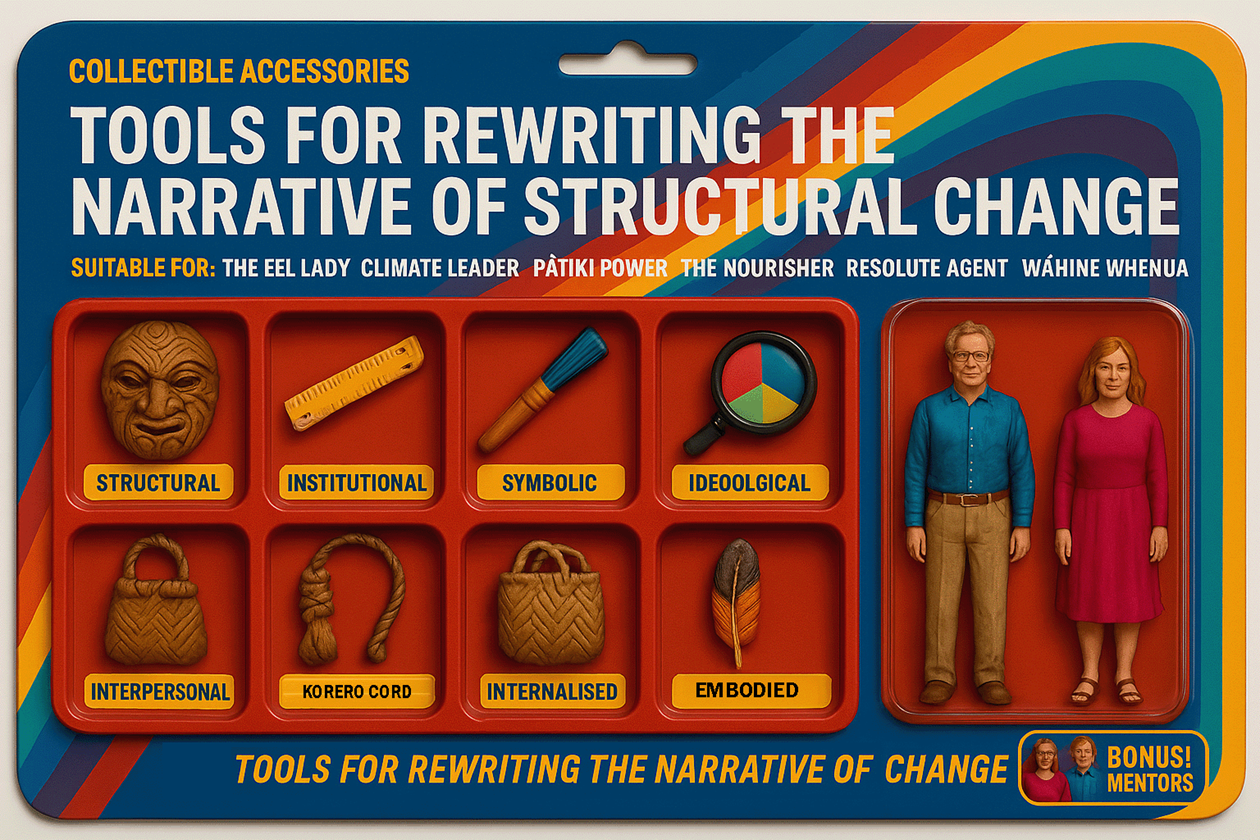
This wasn’t an academic exercise in categorisation. It was a way to uncover where meaningful interventions might occur—at multiple levels. Could we shift policy? Challenge symbols? Support healing? What does a Tikanga-based education programme look like when viewed not just as an interpersonal act, but as structural disruption?
The result was Seven Times Upon an Ism—a collection of retold narratives that made the abstract painfully, beautifully real.
We also found ourselves weaving in stronger threads of resistance: not just where the isms hurt, but where people push back. From student-led reframings of “Mindful Monday” to organisational leaders challenging climate apathy, the stories showed intervention as active, hopeful, and rooted in values.
What This Means for Professional Practice
This work matters because Professional Practice is where the isms show up—in classrooms, meetings, hiring panels, policies, and quiet conversations. And if we’re to respond with integrity, we need tools that match the complexity we face.
The Layered Drivers “isms” framework, now enhanced with story and embodiment, gives us just that: a way to move from paralysis to possibility. It helps practitioners and researchers name the problem, locate its roots, and design responses that are ethically situated and context-sensitive.
As one of our collaborators put it during the workshop:
“This reshaped how I approach education delivery—not as a top-down system, but as a collaborative, culturally anchored practice.”
What’s Next?
We see this work continuing on two fronts. First, as a method—inviting others to tell and re-tell their own professional stories through the isms lens. And second, as a practice development tool—supporting learners, mentors, and organisations to diagnose complexity and plan interventions that actually stick.
Because in the end, it’s not enough to know the system has layers. We need ways to act within them—tugging on threads, telling better stories, and imagining better futures.

 Computing for Sustainability
June 30th, 2025 → 2:10 pm
[…] work developing the Necessarily Insider Research Framework (NIRF) and follows our previous post, Seven Times Upon an Ism, in expanding the tools and lenses for navigating messy, ethically complex, and socially situated […]