How do you create a degree for futures that haven’t happened yet? How do you teach change-making to people who are still discovering what kind of change they want to make?
In our paper, Principles for Educational Innovation – A Developmental Evaluation Perspective, Margy-Jean Malcolm and I reflect on the messy, emergent, but ultimately deeply intentional development of the Bachelor of Leadership for Change (BLfC)—a degree that began with a joke: “What Rimu needed wasn’t a Bachelor of IT… he needed a Bachelor of Rimu.”
From Rimu to BMaD to BLfC
The story of the BLfC starts in a swirl of questions, coffee chats, and stakeholder surveys. There was no blueprint. What we did have was a challenge: could we create a degree that starts with the learner, not the discipline? One that supports self-determined, context-rich, transformational learning for people who want to make a difference?

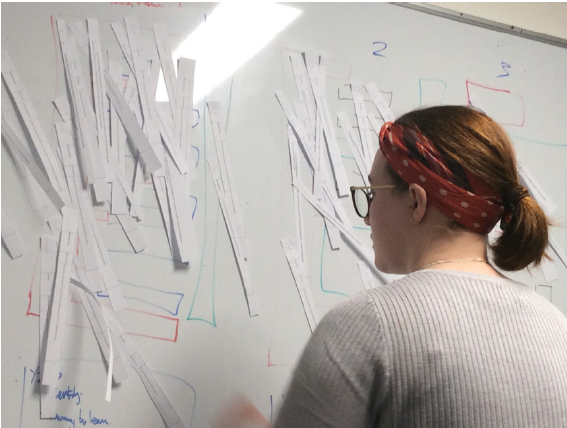
We sketched, prototyped, and crashed the idea against every possible persona we could invent. We asked 300+ people: who do you know who needs a degree like this? What would success look like for them? What would break this degree?

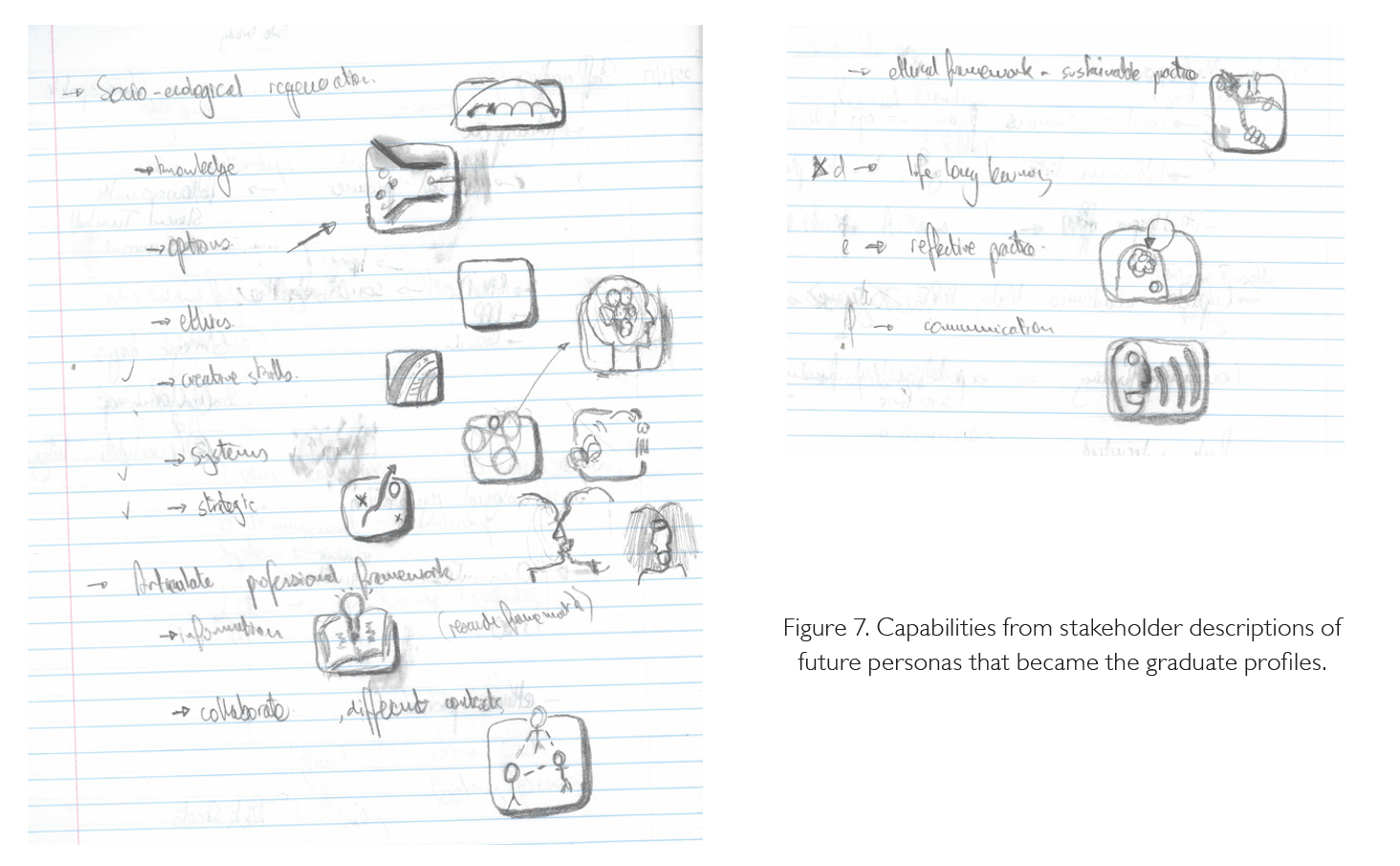
From those conversations, the bones of the programme emerged—lightweight, adaptable, grounded in capability not content. What we didn’t fully realise at the time was that we were applying the principles of Developmental Evaluation. It wasn’t just the degree that was being designed—the way we designed was itself the innovation.
Developmental Evaluation as Mindset
We retroactively examined the process using Michael Patton’s Developmental Evaluation framework. Not as a checklist, but as a way to make sense of how we approached complexity, emergence, feedback, and co-creation.
Some standout reflections:
- Utilisation focus: Every conversation was about real learners, real futures. We didn’t build a degree to meet industry demand. We built it to help people lead change—and then asked whether our structures would actually support that.
- Complexity perspective: We resisted tidy curriculum maps for as long as possible. Instead, we focused on relationships, capability frameworks, and what we came to call the learner’s “exit strategy”—their next step in the world.
- Timely feedback: The personas weren’t just a design tool. They became our evaluators. Could this degree support someone like Nicky, who’d failed in formal schooling but led community change? Could it handle Joe, who wanted to shift from protest to policy?
- Co-creation: The degree wasn’t delivered to learners. It was built with and for learners like them, and continues to evolve through their engagement.
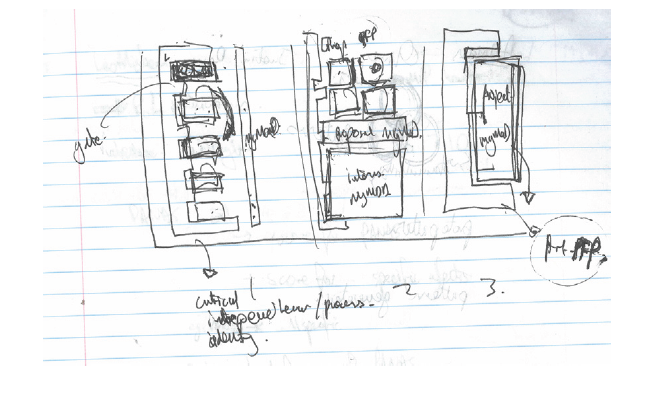
- Systems thinking: We focused on the whole before breaking it into parts. Rather than stacking content like bricks, we mapped interrelationships, stories, and learner-led processesm – what we called an “axis flip” from structure to capability.
- Evaluation as development: Every question we asked – whether about curriculum, delivery, or outcomes – as also a design question. Evaluation wasn’t an afterthought; it was how we figured out what the degree should become.
- Letting ambiguity persist: We deliberately avoided premature clarity. While everyone wanted to know what “the courses” would be, we held off defining structure until we had a clear sense of values, capabilities, and stories. Ambiguity wasn’t failure – it was space for innovation.
Disruption from Within
We’ve described the BLfC as a “weapon of mass disruption” – but one designed to work within the system. We weren’t trying to burn down the academy. We wanted to show that radical relevance was possible inside accreditation, inside regulation, inside the learning outcomes matrix.
Yes, we had to fight some battles. But mostly, we had to keep asking better questions: “How will this help the learner make a difference?” “How might this person break the degree?” And, importantly: “How can we build the plane while flying it – without compromising safety or purpose?”
Thirteen Principles for Educational Innovation
We distilled the following principles – drawn from our experience and offered as guidance for those embarking on similar journeys:
- Educational innovation must be in and of the systems that will use it.
- The learner is the expert on their own experience and outcomes. Presume self-determination and be clear about when and why if this is not possible.
- Innovation comes from deep connection to context, principles, relationships and purpose.
- Distinguish innovation from improvement, and be prepared for the complexity involved.
- Start with deep engagement in purpose and principles, especially if that purpose exposes wicked problems and the need for societal change.
- Start. If #5 leads you to a place where the answers are not obvious, but you have a good sense of values and principles, then this is the right place to be.
- Be collaborative. Surround yourself with a core of change-makers and a wider network you can pull on. Ask questions you don’t know the answers to.
- Engage a positive, creative, and curious mindset. Be critical, but treat criticality as a tool to make things better.
- Be integrative. Ideas and evaluations can come from anywhere. Ask “what?” “so what?” and “now what?” regularly.
- Have no pre-conceived ideas about how it might work. Allow ambiguity to persist as long as possible.
- Treat barriers as clues to design.
- Don’t pick winners. Instead, develop approaches that embrace change.
- Test with actual people or rich personas. The more diverse and deeply imagined, the better.
What’s Next?
Since its launch until it was mothballed to protect it from RoVE, the BLfC welcomed learners who might never have found a place in traditional education. They’ve gone on to lead sustainability projects, transform their communities, and take on wicked problems with courage and clarity.
But the development hasn’t stopped. Because real educational innovation is never finished—it adapts, evolves, and continues to learn. Just like our learners. We’re planning to bring back the BLfC as the Bachelor of Professional Practice – watch this space.
Paper: Mann, S., & Malcolm, M.-J. (2022). Principles for Educational Innovation – A Developmental Evaluation Perspective. Scope (Work-based Learning)(3), 35-50. https://doi.org/https://doi.org/10.34074/scop.6003008

 Computing for Sustainability
Posted on June 30, 2025
0